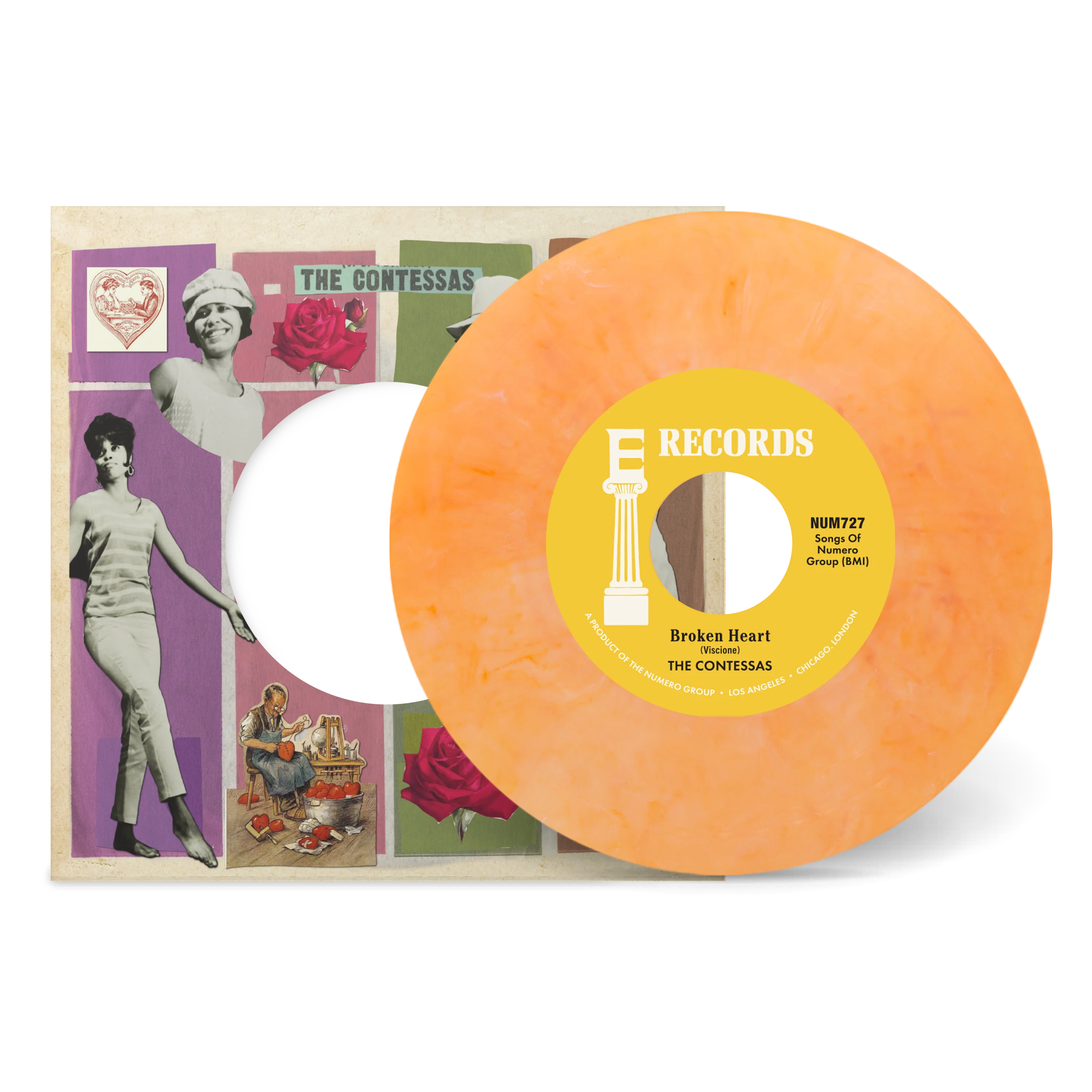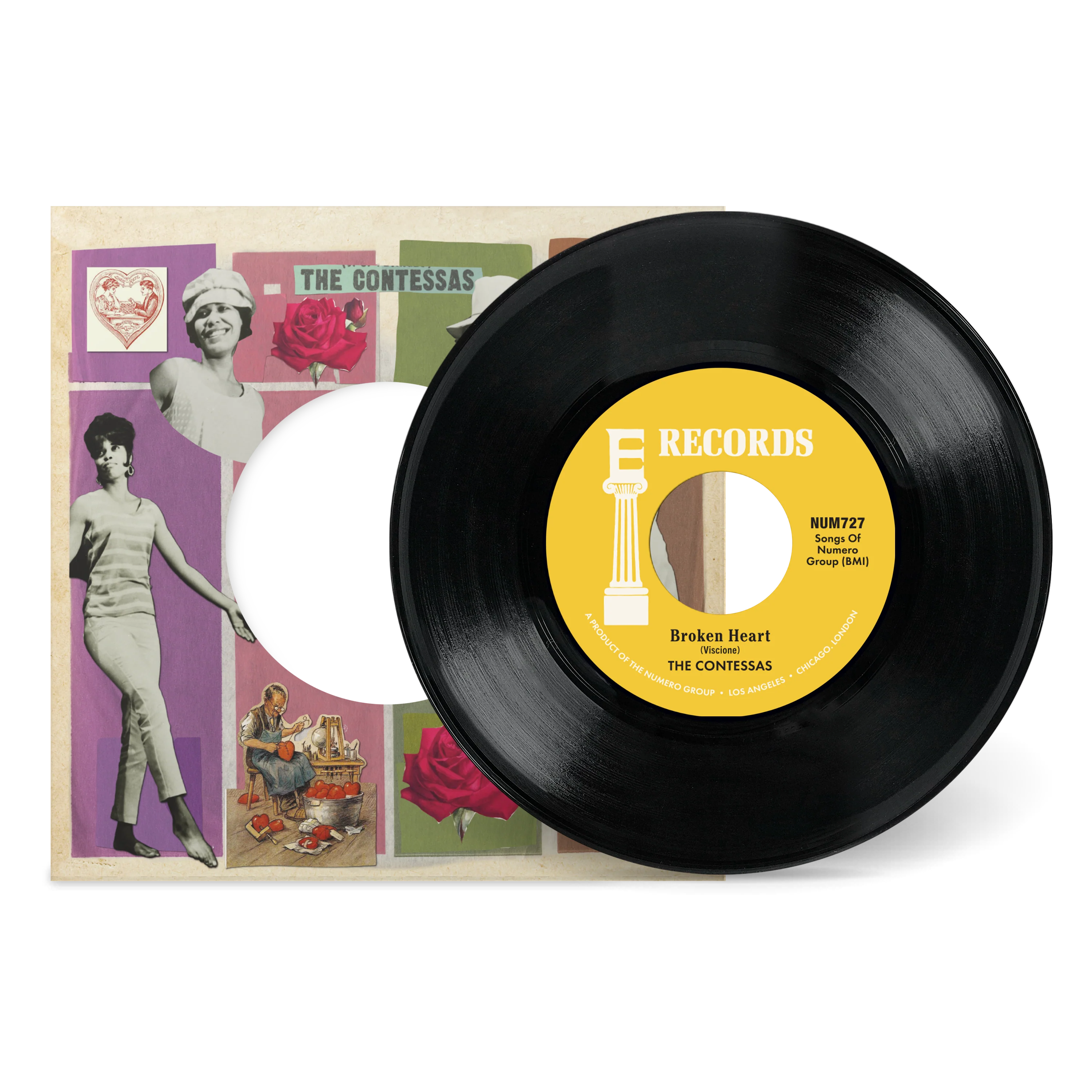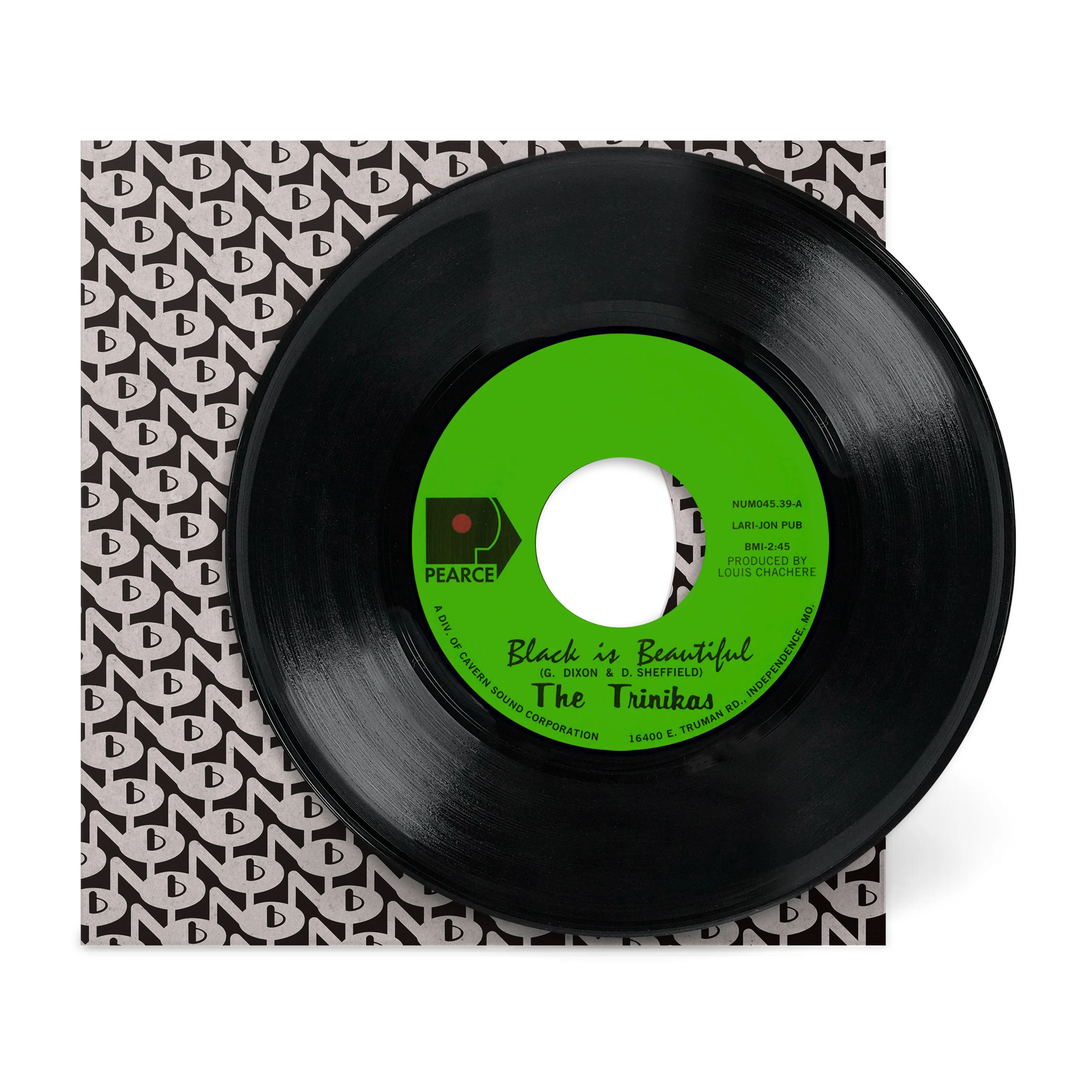
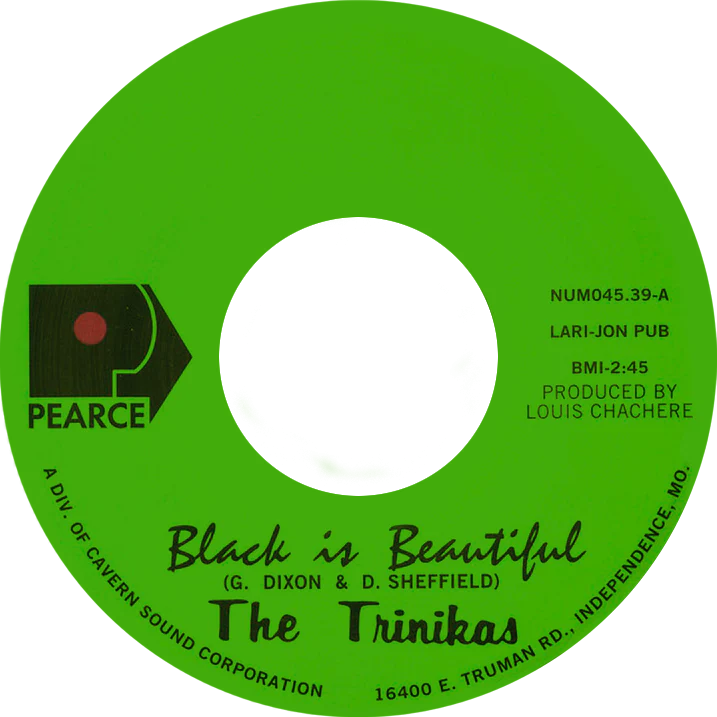
Black Is Beautiful b/w Remember Me
Since the rediscovery of the Trinikas pleading “Remember Me” at the turn of the century, rumor held that the song had been written as an elegy, after the tragic 1969 passing of original Trinikas tenor Marsha Bratton. But songwriter and singer Debbie Sheffield authoritatively sets that record straight: “The song’s about an intense relationship. Me and my boyfriend kept breaking up over and over. Nothing more. It’s interesting that she would be linked to that song, ‘cause Marsha didn’t really like me at first. When we all got to high school, we became great friends.” Before adopting the Trinikas name, Bratton, Sheffield, Georgetta Dixon, and Lenise “T-Bird” Morgan candy striped at hospitals as part of their junior high school’s Paramedical Career Club, singing to patients when appropriate. When Bratton, Dixon, and Morgan graduated to Oklahoma City’s Douglas High, they kept up singing with the younger Sheffield, daughter of unsung jazz pianist Leslie Sheffield. Sheffield had been a pioneer on the outer-west jazz circuit, holding down a regular night at Louie’s 29 Club during the ’50s and ’60s. His insistence that Debbie learn to play the piano and his support of her compositional work ultimately gave her singing group a leg up over their Douglas High peers. Sheffield rejoined her classmates in the fall of 1967, began singing with Leroy Hicks’ choir, and spent her afternoons and early evenings in his classroom writing and singing with the group that had come to be known as the Trinikas.
In 1962, Oklahoma City entrepreneur Richard Gilleland opened a local franchise branch of Saugus, California-based Century Records, filling a void in regional record manufacture demand with affordable pressings and recordings, many tracked on his mobile recording studio. “I had a large Ampex 354. But I wasn't interested in getting into the rock music stuff. The musicians were flaky, and they wanted you to put up the money,” said Gilleland. “I decided I’d rather stick with the schools.” He struck a deal with Douglas High to record a series of LPs to be used as music program fundraisers. Debbie Sheffield and Georgetta Dixon's “Black Is Beautiful” had become something of a theme song within Douglas High’s halls; it was the fundraising album’s lone original, and ultimately its title track. The Trinikas cut the track in Gilleland's garage, with Ronald Hamilton on bass and David McKinney on drums, and issued a teaser on Century with the Sheffield/Felix Scott duet “On The Street Where You Live” as the flip. The 45s were scooped up quickly by the student body, leading Gilleland to soften his hardline stance on investing in groups.
In the fall of 1969, Gilleland and the Trinikas journeyed 360 miles northeast to Independence, Missouri’s Cavern Studio to capture a professional rendering of “Black Is Beautiful,” in addition to fresh Sheffield original “Remember Me.” Kansas City organ specialist Louis Chachere was called on to produce, fresh off “The Hen,” a Hammond-funk workout he’d be best remembered for. A fee of $600 was charged for the national distribution and promotion of the resulting 45 by Pearce, John Pearson and Larry Good's custom recording operation that amounted to a local version of Century. Released in October 1969, the 45 eventually saw several pressings and as many as 3500 copies. But with the Trinikas still in high school, opportunities to promote the single outside their hometown were limited.
The Trinikas recordings at Cavern would be their last. Marsha Bratton, the daughter of a stern minister, was on restriction the night of Douglas High’s fall talent show. “We were prepared to do the show without her, but she snuck out and surprised us,” recalled Sheffield. “That was the last time I saw her.” Bratton and her sister left the talent show and were en route to Tulsa when their car was struck by an oncoming vehicle. Marsha died instantly, and her sister lost both legs. Douglas High’s fundraising album was released in the spring of 1970, carrying a dedication to Marsha Bratton. The Trinikas went on a brief hiatus that winter and skipped the spring 1970 talent show that would be captured on Century’s Black-Out New Sounds of 70 LP, a double album Gilleland billed to its financiers as a way to showcase local talent. Douglas High talents the Chante’s, Uniques, Daeshawns, Antics, and Star Lites turned in serviceable cover songs of the day’s hits, but none of them could match what their classmate's quartet had achieved.
The Trinikas’ downtime continued through the summer of 1970, prompting Gilleland to suggest that Sheffield break off and go solo. Marsha Bratton’s replacement was found in Gloriadean Tucker, and the group continued to sing together until Tucker and Sheffield’s graduation in 1971. “I went off to Virginia Union that fall and never looked back,” said Sheffield. “We were so close, us girls. Doesn’t really matter if people have the story wrong, I’m just so surprised we’re remembered at all.”
Original: $2.00
-65%$2.00
$0.70Product Information
Product Information
Shipping & Returns
Shipping & Returns
Description
Since the rediscovery of the Trinikas pleading “Remember Me” at the turn of the century, rumor held that the song had been written as an elegy, after the tragic 1969 passing of original Trinikas tenor Marsha Bratton. But songwriter and singer Debbie Sheffield authoritatively sets that record straight: “The song’s about an intense relationship. Me and my boyfriend kept breaking up over and over. Nothing more. It’s interesting that she would be linked to that song, ‘cause Marsha didn’t really like me at first. When we all got to high school, we became great friends.” Before adopting the Trinikas name, Bratton, Sheffield, Georgetta Dixon, and Lenise “T-Bird” Morgan candy striped at hospitals as part of their junior high school’s Paramedical Career Club, singing to patients when appropriate. When Bratton, Dixon, and Morgan graduated to Oklahoma City’s Douglas High, they kept up singing with the younger Sheffield, daughter of unsung jazz pianist Leslie Sheffield. Sheffield had been a pioneer on the outer-west jazz circuit, holding down a regular night at Louie’s 29 Club during the ’50s and ’60s. His insistence that Debbie learn to play the piano and his support of her compositional work ultimately gave her singing group a leg up over their Douglas High peers. Sheffield rejoined her classmates in the fall of 1967, began singing with Leroy Hicks’ choir, and spent her afternoons and early evenings in his classroom writing and singing with the group that had come to be known as the Trinikas.
In 1962, Oklahoma City entrepreneur Richard Gilleland opened a local franchise branch of Saugus, California-based Century Records, filling a void in regional record manufacture demand with affordable pressings and recordings, many tracked on his mobile recording studio. “I had a large Ampex 354. But I wasn't interested in getting into the rock music stuff. The musicians were flaky, and they wanted you to put up the money,” said Gilleland. “I decided I’d rather stick with the schools.” He struck a deal with Douglas High to record a series of LPs to be used as music program fundraisers. Debbie Sheffield and Georgetta Dixon's “Black Is Beautiful” had become something of a theme song within Douglas High’s halls; it was the fundraising album’s lone original, and ultimately its title track. The Trinikas cut the track in Gilleland's garage, with Ronald Hamilton on bass and David McKinney on drums, and issued a teaser on Century with the Sheffield/Felix Scott duet “On The Street Where You Live” as the flip. The 45s were scooped up quickly by the student body, leading Gilleland to soften his hardline stance on investing in groups.
In the fall of 1969, Gilleland and the Trinikas journeyed 360 miles northeast to Independence, Missouri’s Cavern Studio to capture a professional rendering of “Black Is Beautiful,” in addition to fresh Sheffield original “Remember Me.” Kansas City organ specialist Louis Chachere was called on to produce, fresh off “The Hen,” a Hammond-funk workout he’d be best remembered for. A fee of $600 was charged for the national distribution and promotion of the resulting 45 by Pearce, John Pearson and Larry Good's custom recording operation that amounted to a local version of Century. Released in October 1969, the 45 eventually saw several pressings and as many as 3500 copies. But with the Trinikas still in high school, opportunities to promote the single outside their hometown were limited.
The Trinikas recordings at Cavern would be their last. Marsha Bratton, the daughter of a stern minister, was on restriction the night of Douglas High’s fall talent show. “We were prepared to do the show without her, but she snuck out and surprised us,” recalled Sheffield. “That was the last time I saw her.” Bratton and her sister left the talent show and were en route to Tulsa when their car was struck by an oncoming vehicle. Marsha died instantly, and her sister lost both legs. Douglas High’s fundraising album was released in the spring of 1970, carrying a dedication to Marsha Bratton. The Trinikas went on a brief hiatus that winter and skipped the spring 1970 talent show that would be captured on Century’s Black-Out New Sounds of 70 LP, a double album Gilleland billed to its financiers as a way to showcase local talent. Douglas High talents the Chante’s, Uniques, Daeshawns, Antics, and Star Lites turned in serviceable cover songs of the day’s hits, but none of them could match what their classmate's quartet had achieved.
The Trinikas’ downtime continued through the summer of 1970, prompting Gilleland to suggest that Sheffield break off and go solo. Marsha Bratton’s replacement was found in Gloriadean Tucker, and the group continued to sing together until Tucker and Sheffield’s graduation in 1971. “I went off to Virginia Union that fall and never looked back,” said Sheffield. “We were so close, us girls. Doesn’t really matter if people have the story wrong, I’m just so surprised we’re remembered at all.”